J. R. R. Tolkien was a gifted philologist: not only did he know his subject exceedingly well, but he also had an innate ability to understand and perceive tongues. Language matters are tightly interwoven into Tolkien’s tales, and they, as the Professor himself stated, were “fundamentally linguistic in inspiration” (Letters, № 165). Thus, it is only natural that Arda had its own talented linguists, and they were the Elves.
Dots and curls: on the diacritics in Quenya and Sindarin.
Pronunciation of words in real and invented languages can be of various kinds: in some tongues words are pronounced in the same way they are spelt, but in others there are entire systems with reading rules of different degrees of complexity. In some cases the way a word is spelt versus the way it is pronounced can be divided by a yawning gap. Some languages have special marks above or below letters to indicate certain peculiarities in their pronunciation. J. R. R. Tolkien’s invented languages Quenya and Sindarin are no exceptions. Read more
On linguistic creation: what makes Tolkien’s invented languages special.
Language creation was one of the greatest interests that J. R. R. Tolkien had in his life. The Professor’s stories were closely connected with his invented tongues which were an integral and vital part of the whole mythology of Arda. There are a lot of various aspects to look at Tolkien’s language creation from, so to begin with the exploration of this amazing manifestation of his creativity, I am going to look into what makes Tolkien’s languages resemble those we speak in our world.
“Never again in my ears shall be heard the tongue of those who slew my kin in Alqualondë!”
What is language for a people? The most obvious answer is that it is a means of communication. But what if we look deeper and examine other properties of language rather than communication alone?
Language notes /// On Fingon.

Among the characters in The Silmarillion one of the most renowned for his deeds of valour and nobility was Fingolfin’s eldest son Fingon. Named the Valiant, Fingon won great honour for his glorious feats and showed himself as a person of real courage.
Glorfindel: the power of white light (II)

The rider’s cloak streamed behind him, and his hood was thrown back; his golden hair flowed shimmering in the wind of his speed. To Frodo it appeared that a white light was shining through the form and raiment of the rider, as if through a thin veil.
(Fellowship of the Ring, p. 275) Read more
Language notes /// On Morgoth.

As many major characters in Tolkien’s work, the greatest villain of Middle-earth Morgoth had a lot of different names and titles among Elves and Men that reflected his character and personality. Read more
Melkor’s secret vice.
Tolkien stated in The Silmarillion that Melkor was the mightiest of the Ainur and surpassed his brethren in many ways. He had a share in everything others knew, but how he chose to apply his unique gifts is a matter for another discussion. While very often Melkor comes across as a pure machinery adept and keen on technology, he had a talent which could make even Fëanor twitch with envy: the First Dark Lord was a gifted linguist.
Language notes /// On the Two Trees.
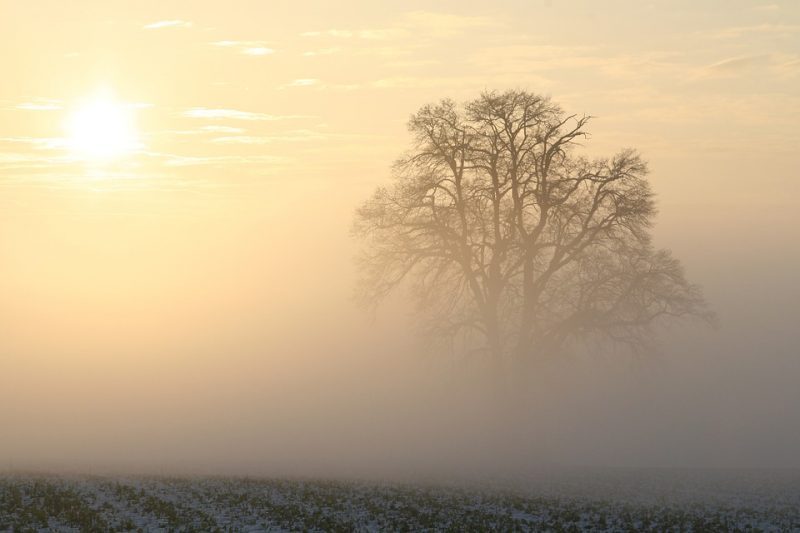
The Two Trees of Valinor created by Yavanna were the source of illumination in Valinor. Being the luminaries of the natural origin the Trees were noted for their soft light, gentle dew and cycles of waxing and waning which led to the beginning of time measurement.
 Middle-earth Reflections